Grimes Graves and Beyond: A Local Guide to British Flint Sites
Flint is stubborn. It survives ploughing, frost and centuries of feet, and it still turns up in field corners looking as sharp as the day it was struck. Britain holds some of the richest prehistoric flint-working landscapes in Europe, and the best of them are open to anyone with sturdy boots and a spare afternoon. Grimes Graves is the headline act, but it is far from the whole story.
Grimes Graves: The Pit You Can Enter
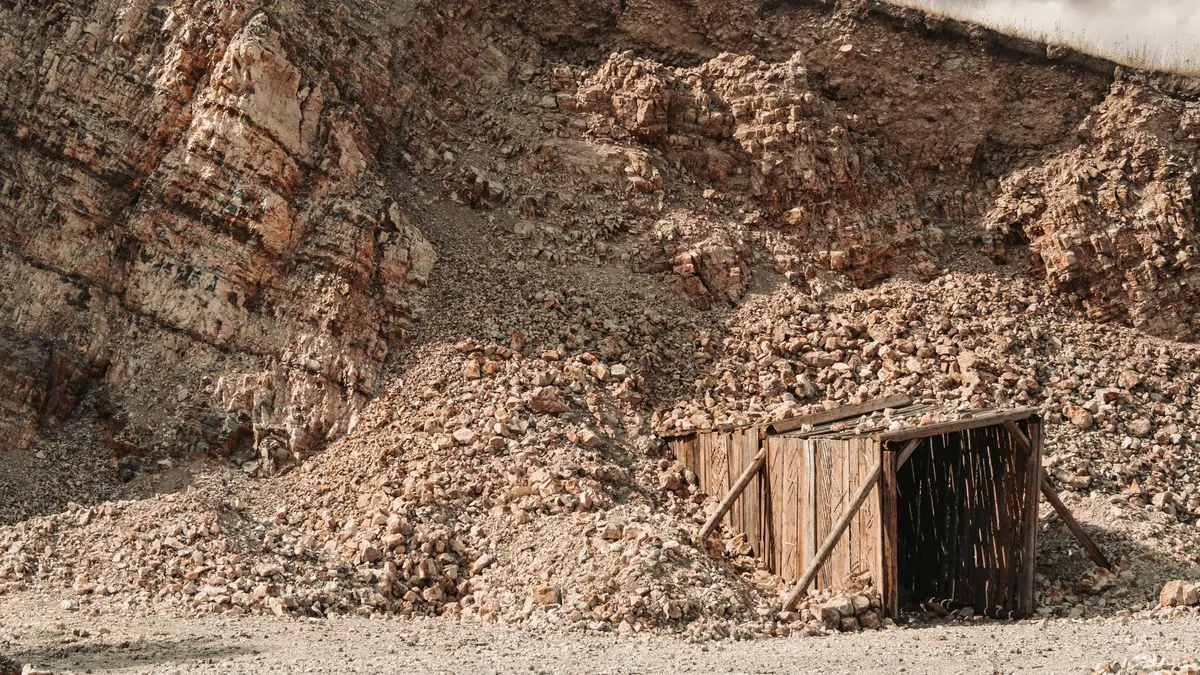
Grimes Graves sits in the Breckland heath near Thetford in Norfolk. It is the largest and best-known Neolithic flint mine in Britain: several hundred shafts spread across a wide, dimpled landscape, worked in the later Neolithic. What sets it apart from most prehistoric sites is the access. English Heritage has a reconstructed shaft with a ladder down to a gallery, so you can stand where miners once crouched with antler picks, prising out seams of floorstone.
The flint lies in chalk. Miners sank shafts through sand and gravel, then followed the seam sideways. Look for the spoil heaps: the low mounds across the heath are what generations of digging left behind. The visitor centre explains the toolkit well — red deer antler picks, shoulder-blade shovels, chalk lamps — but don't expect a grand museum. Expect a landscape, and a very good one.
Opening times vary and the shaft closes seasonally, so check before you travel.
The Sussex Mines: Cissbury, Harrow Hill and Blackpatch
The South Downs hold another cluster of flint mines. Cissbury Ring, near Worthing, is a large Iron Age hillfort built over an earlier mining complex; the earthwork is later than the pits beneath it. It is National Trust land, free to walk, with long views to the coast. You won't descend a shaft, but you can see the hollows and read the ground.
Harrow Hill and Blackpatch, both near Findon, are further mining sites on the Downs. Blackpatch was excavated in the twentieth century and produced clear evidence of systematic shaft-and-gallery working. These are subtle places. There is often no interpretation board at all, which is precisely why they reward a little preparation: read up beforehand, then look for circular depressions and spreads of chalk spoil.
Beyond the Chalk: Surface Sites and Beach Flint
Not all flint came from mines. Much of it was gathered from the surface — beaches, river gravels, ploughsoil and clay-with-flints capping on the downs and Chilterns. Good places to see raw flint in the wild include:
- Beer, east Devon: chalk cliffs and a beach full of flint pebbles; the local dark flint was prized and moved around.
- Cromer and the north Norfolk coast: flint eroded from chalk and glacial deposits, replenished by every tide.
- The Yorkshire Wolds and Flamborough Head: chalk country where flint appears in fields and in cliff falls.
- Pegwell Bay, Kent: chalk and flint close to the surface, easiest to see on a low tide.
- The Berkshire Downs and Chilterns: clay-with-flints deposits, with workable nodules in ploughsoil.
Never hammer nodules out of a cliff face or bedrock. Cliff falls are dangerous, and most of these places are protected. Picking up loose pebbles on a beach is generally fine, but check local bylaws, and never dig or collect on a Scheduled Monument, Site of Special Scientific Interest or National Nature Reserve. If in doubt, photograph it and leave it where it lies.
What the Sites Teach About Extraction and Toolmaking
Standing on a site teaches what photographs cannot. You notice how narrow the best seam is, and why anyone would sink a shaft several metres to reach it. At Grimes Graves the finest stone lay beneath poorer layers; that effort only makes sense if the reward was large, reliable and high quality.
Then there is knapping. A flint worker at a mine was not making finished tools at the pithead. The rough work happened at the source: testing nodules, removing cortex, knocking out roughouts. The fine work happened elsewhere, at settlements — which is why polished axes and slender arrowheads turn up far from any mine. Material from a site such as Easton Down in Wiltshire or Martin's Clump in Hampshire represents the first stage of a long chain.
A quick checklist for reading an assemblage:
- Cortex: the chalky white outer skin. Lots of it means early-stage working.
- Cores: the leftover lumps from which flakes were struck. Study the flake scars.
- Flakes and blades: sharp edges, a bulb of percussion, ripples running across the surface.
- Roughouts: partly shaped axes, abandoned because of a flaw or a bad break.
- Retouched pieces: scrapers, arrowheads and knives — the finished end of the process.
Planning a Visit
- Grimes Graves is managed by English Heritage; check opening days before a long drive, especially outside summer.
- Cissbury Ring and most Downland sites are free and open access, with uneven ground and no facilities.
- Wear boots and carry water. Loose chalk and old shafts are unstable — keep to paths and keep dogs close.
- Binoculars help. You can read the humps and hollows of a mining landscape from a safe distance.
- Public rights of way cross many of these sites. Stay on them; farmland and scheduled areas are not open to wandering.
Where to See the Finds
County museums do the heavy lifting. Norfolk's collections hold Grimes Graves material, Sussex and Wiltshire museums cover the Downs and Wessex sites, and the British Museum holds national collections of Neolithic flintwork. Seeing a polished axe, an antler pick and a worked core in the same case makes the field evidence click into place.
It is also worth watching a knapping demonstration or joining a local archaeology group. Many county societies run field-walking days and winter lectures; that is the quickest route from "I found a funny stone" to "that's a core rejuvenation flake".
A Short Note Before You Go
Take only photographs from protected sites, and report anything obviously significant to the local Historic Environment Record or a museum rather than pocketing it. If you are visiting with children, the ladder at Grimes Graves is memorable but not for everyone — the heath walk alone justifies the trip. Go slowly, look at the ground, and let the landscape do the talking.
Photo: Lisá Yakurím / Pexels
Seasonal Tinder: What to Collect in Each British Month for Flint Sparks
A month-by-month British guide to gathering dry natural tinders — birch bark, thistle down, reed mace and...
Flint vs Chert: How to Tell Them Apart in the Field
Flint is a kind of chert, but the two behave differently under a hammerstone. Here's how to read colour,...
About Us