Flint in the British Neolithic: How Toolkits Changed from 4000 BCE
Ask a flint collector what a British Neolithic tool looks like and the answer changes with the county. In Norfolk you might be shown a broad flake with a steep scraper edge, in Wiltshire a polished flint axe lifted from a pit, in Angus a leaf-shaped arrowhead of pale grey flint that travelled a long way from home. That variety is the point. When farming took hold in Britain around 4000 BCE, flintknapping did not stop. It was reorganised around new work, new materials and new ideas about what a tool was for.
A broader, plainer toolkit
Mesolithic flintwork is narrow and deliberate. Hunters and gatherers made microliths — small bladelets shaped into points and geometric forms — and set them into wooden shafts as barbs and tips. Cores were carefully prepared to produce long, regular blades, and very little was wasted.
From about 4000 BCE the emphasis shifts. Flakes become broader, more irregular and more often struck quickly from single or opposed platform cores. Formal blade production does not vanish; long blades still turn up as knives and sickle elements. But the average Neolithic assemblage is dominated by scrapers, lightly retouched flakes and edge-damaged pieces used for hide working, bone, wood and butchering.
Two things drive this. Composite hunting gear gives way to arrows tipped with a single flint head, so tiny inserts are no longer needed. And settled farming communities relied more heavily on whatever flint lay closest to hand — often small, frost-cracked gravel flint rather than the deep, clean chalk flint that Mesolithic knappers prized. Raw material shapes the toolkit as much as fashion does.
Polished axes: work made visible
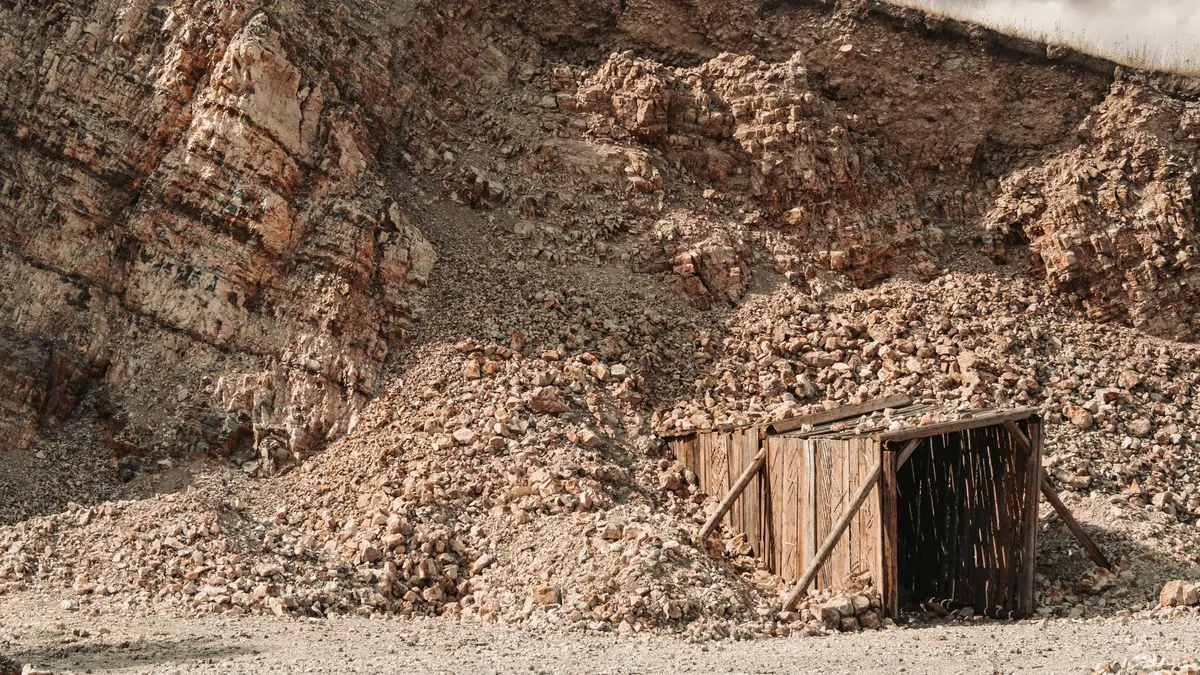
Nothing announces the Neolithic quite like a polished axe. Flint examples were made at mines — Grimes Graves in Norfolk, Cissbury and Harrow Hill in Sussex, among others — where shafts several metres deep were sunk through chalk using antler picks and ox shoulder-blade shovels. Many axes, though, were made of stone: the green tuff of Great Langdale in Cumbria, Graig Lwyd in north Wales, and various Cornish rocks. Roughouts cluster near the sources; finished axes turn up hundreds of kilometres away, which tells you something about exchange networks and about how far a good blade could travel.
How an axe was made
- Rough out the shape with a hammerstone, thinning the edges with softer percussion or light flaking.
- Grind and peck the surface against a sandstone block with sand and water. This is the slow stage — hours of repetitive grinding turn a flaked lump into a smooth, symmetrical blade.
- Refine and polish the cutting edge, sometimes the whole surface.
- Haft it into a wooden or antler sleeve set in a handle, secured with birch bark tar and bindings.
Plenty of axes show little or no wear. They were placed whole in pits, ditch terminals and graves, which suggests the making and the giving away mattered as much as the chopping.
Sickles and the harvest
Harvesting grain changed flint use more than any other single activity. A Neolithic sickle is a composite tool: several flint blades set into a groove cut at an angle along a wooden or antler handle, fixed with resin or tar. Complete examples survive from waterlogged ground, but most of the time we find the blades on their own.
The giveaway is gloss. Cutting silica-rich cereal stems polishes flint to a bright, glassy sheen along one edge — sickle gloss — and it often survives on ploughsoil pieces. Many sickle elements also carry deliberately serrated edges. Replicas cut grain efficiently, and where the stems were taken, high for the ears or low for straw, leaves different wear patterns. Reading that gloss is one of the most useful ways of working out how Neolithic fields were managed.
Arrowheads and the shape of the later Neolithic
Early Neolithic arrowheads are mostly leaf-shaped, pressure-flaked with an antler tine, and they are common finds on settlements and in long barrow contexts. Chisel and transverse arrowheads appear alongside them, often associated with Peterborough Ware. By the later Neolithic, oblique arrowheads become the local fashion, and barbed-and-tanged forms arrive with Beaker material after about 2500 BCE.
The heads themselves are small, but they record a change in how hunting was organised: a single skilled knapper could produce a serviceable arrowhead from a thin flake in minutes. They also hint at conflict. Arrowheads found embedded in bone are rare, but they exist, and enclosures with ditches and banks suggest that not every gathering was peaceful.
What regional assemblages reveal
- Chalk downland — Wessex, Sussex, Norfolk: abundant good flint, mines, large assemblages and plenty of formal tools.
- Eastern England — Grimes Graves and its neighbours: heavily patterned axe production, with axes moving outwards along exchange routes.
- Scotland — chert, quartz and Arran pitchstone used locally, with chalk-flint axes and arrowheads arriving from further south.
- Wales, Cornwall and Devon — coastal pebble flint and local stone, more reliance on polished stone axes, less on mined flint.
- River valleys and glacial gravels — small, flawed flint, more informal tools and far more waste per finished piece.
Read those differences as access and choice rather than progress. An assemblage full of rough scrapers in a flint-poor upland is not a lesser culture; it is a sensible response to the material available. Equally, a single exotic arrowhead on a Scottish site is evidence of contact that no amount of local knapping could produce.
Getting your eye in
The fastest way to learn Neolithic flint is to handle it. Museum collections at Grimes Graves, Salisbury, Avebury, the National Museum of Scotland and the Museum of Archaeology and Anthropology in Cambridge all hold good material, and many local
Photo: 14062968 / Pixabay
Seasonal Tinder: What to Collect in Each British Month for Flint Sparks
A month-by-month British guide to gathering dry natural tinders — birch bark, thistle down, reed mace and...
Flint vs Chert: How to Tell Them Apart in the Field
Flint is a kind of chert, but the two behave differently under a hammerstone. Here's how to read colour,...
About Us